
 CALL (618) 343-9899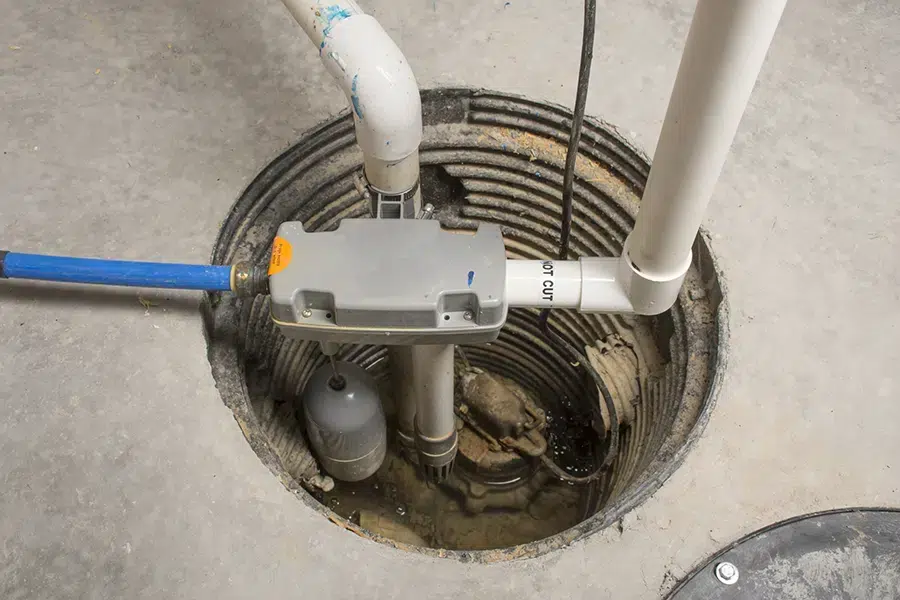
2. The Sump Pump is the Wrong Size
If you have an incorrectly sized pump or if the pump is not installed properly, there will most likely be a problem. A small sump pump is often just as effective as a big one. When a sump pump is too big, the pump is forced to work harder, resulting in a shorter product lifespan. But if it’s too small, it may not be able to adequately pump out the water, again resulting in a shorter lifespan.
3. Improper Installation
Installing a sump pump must be done exactly right. Manufacturer’s instructions must be followed carefully for the installation in order to avoid severe water damage down the road. Most manufacturers recommend or require a check valve to be installed on the discharge line. If not installed, the backflow of water can cause the pump impeller to rotate backwards and unscrew off the motor shaft. In this scenario, you will still hear the pump motor running, but it will not be pumping any water.
Most manufacturers require the drilling of a small air relief hole in the discharge line between the pump and the check valve which is intended to prevent the pump from having to overcome the air pressure in the discharge pipe. The discharge pipe must be of the required diameter.
Lastly, the sump pump pit should not be set in dirt or gravel. This causes debris to enter into your pump and can result in interference with the pump’s on/off switch or float arm.
 All Service Areas